
How to Add and Use the WordPress Previous Post Block in Gutenberg

The WordPress Previous Post block in Gutenberg is a powerful tool that enhances the navigation experience for readers on your WordPress website. By incorporating this block into your posts or pages, you can provide a seamless way for users to explore previous posts in a specific order. In this blog post, I will show you […]
How to Add the Gutenberg Comments Block in WordPress

The Gutenberg Comments Block allows you to display all the comments on the frontend of your respective posts and pages submitted by readers and users. The Comment Block is mostly used in designing the blog page template, so the block automatically appears on all blog posts. Once you add the block to your blog page […]
How to Use the Gutenberg Term Description Block in WordPress

The Gutenberg Term Description is a good-for-nothing WordPress block. Honestly speaking! It doesn’t add any value to your site. The block comes with only two words ‘Term Description‘ that you cannot edit anyway. You can add these two words to your site using the normal paragraph block If you want. So, I really wonder what […]
How to Use the WordPress Login/Out Block

The WordPress Login/Out Block is a block that allows you to display the login and logout links directly anywhere on your WordPress site. It provides a convenient way for users to log in or log out directly from the pages or posts of your site. In this short article, I will show you how to […]
How to Use the Gutenberg Comment Form in WordPress

The Gutenberg Comment Form block allows users to submit their views and feedback to respective posts and pages. This is actually a must-have block in blog post templates. The Comment Form is one of the easiest blocks in WordPress. In this article, I will show you how to use the Gutenberg Comment Form in WordPress […]
How to Use the WordPress Accordion Block to Create Collapsible Content

The WordPress Accordion Block allows you to organize and display content in a collapsible format. This block is particularly useful for presenting information in a compact and user-friendly manner, where users can click on a section to expand and view the details. By default, the Accordion Block shows only the headings. As a result, users […]
How to Use the WordPress YouTube Block
The WordPress YouTube block is a free Gutenberg block by which you can embed videos from the YouTube streaming platform into your blog posts and pages. The block is available in both the Gutenberg and Classic editor. In this short article, I will show you how to use the WordPress YouTube Block. Step 01: Find […]
How to Use the WordPress Twitter Block
The WordPress Twitter block is a default WordPress block that allows users to embed content from Twitter into their WordPress posts and pages. By using the Twitter block, users can display individual tweets on their site, including the text, images, and links from the tweet. In this tutorial post, I will show you how to […]
How to Use the WordPress Embed Block

The Gutenberg Embed is one of the most useful blocks in WordPress. It allows you to add and display content from various sources, like videos, images, tweets, audio, and other media, directly into your WordPress posts and pages. As a result, you don’t have to upload that content to your site, which can save you […]
How to Use the Advanced Heading Block in WordPress
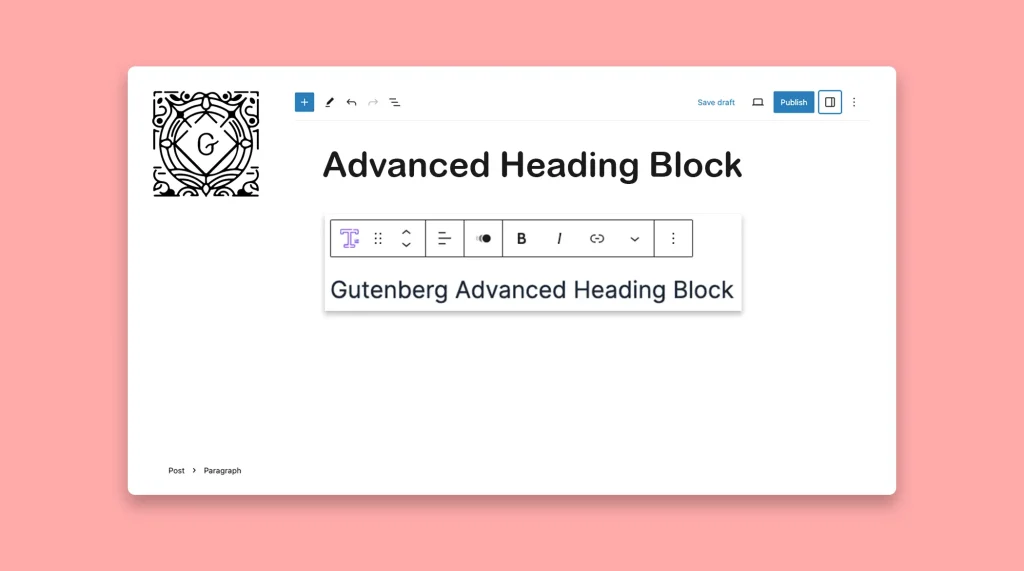
The Advanced Heading block is a powerful custom Gutenberg block that allows you to create eye-catching and engaging headings for your content. It gives you complete control over the styling, formatting, and design of your headings. You can choose from a wide range of fonts, adjust the letter spacing, change the color, add background effects, […]