


Getting hired as a content writer is no longer just about having good writing skills. Clients and employers want proof that you can research, write, optimize, and deliver content that produces results. A well-built content writing portfolio serves as that proof.
According to Upwork, freelance professionals with a published digital portfolio are hired 9 times more often than those who do not have one.
The demand for skilled writers is still strong, but the market has become more competitive. Around 90% of marketing executives agree that high-quality content creation and editing remain the most important skills for marketing success.
At the same time, businesses are becoming more selective and prefer writers who can demonstrate expertise through real work samples, case studies, and niche-specific content. Whether you are a beginner with no clients or an experienced writer looking to attract better opportunities, a strong portfolio can help you stand out.
In this guide, you will learn how to build a content writing portfolio from scratch, choose the right samples, showcase your expertise, and create a portfolio that helps you win more clients and job offers.
Understanding a Content Writing Portfolio

A content writing portfolio is a curated collection of your best writing work. It shows potential clients exactly what you can do before they decide to hire you. Think of it as working proof of your skills. A portfolio does not just tell clients you are a good writer. It shows them.
The purpose is specific. Clients want evidence. They want to see how you handle research, structure arguments, write for target audiences, and serve business goals. Your portfolio delivers that evidence in one place, on demand, 24 hours a day.
How a Portfolio Differs from a Resume
A resume lists your experience. A portfolio proves it. A resume tells a hiring manager where you worked and for how long. A portfolio shows the actual content you created, the results it generated, and the expertise you developed along the way.
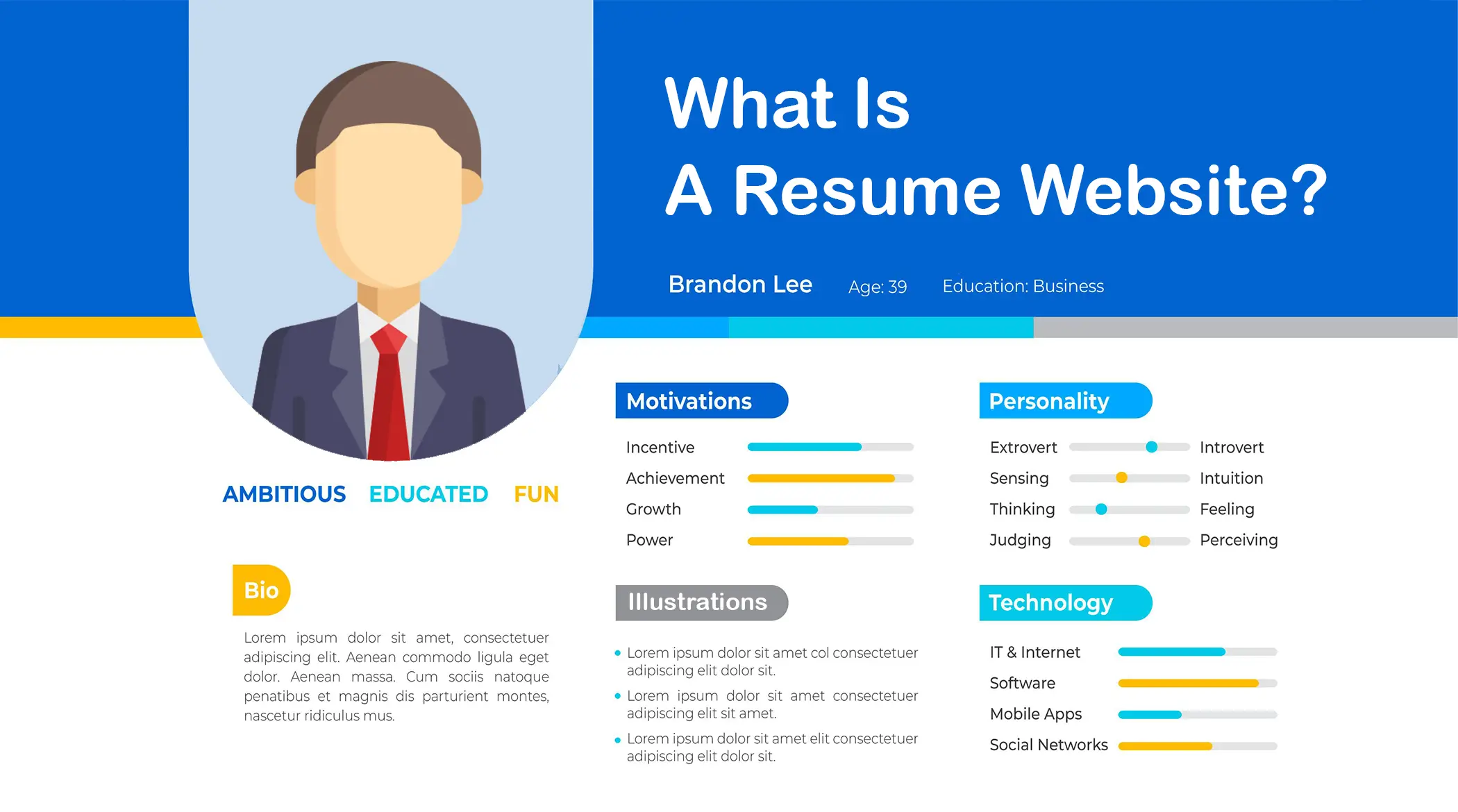
For content writers, the portfolio almost always matters more than the resume. Most clients and content managers skip the resume entirely and go straight to your samples. If your writing impresses them, you get the work. For more details, explore this post on what is a resume website.
Why Every Writer Needs a Portfolio
Whether you are a freelance writer, an in-house content strategist, a B2B writing specialist, or a SaaS content writer, a portfolio is not optional. It is your primary sales tool.
Without a portfolio, you rely entirely on interviews and references. With one, your writing speaks for you around the clock. It answers client questions, builds trust, and filters out the wrong clients before they ever reach out to you.
According to the Content Marketing Institute’s 2024 B2B Content Marketing Report, 73% of B2B marketers actively invest in content marketing. Those organizations are continuously hiring writers. The ones who win the best contracts are the ones with a visible, well-built portfolio.
Explore this comprehensive tutorial post on how to create a resume website.
How Clients Evaluate a Content Writing Portfolio
As a writer, you definitely expect to be hired. But for this, you must have an idea of what clients actually look for while evaluating a content writing portfolio. Below, I have listed them.

a. Writing Quality
Clients read your samples with one question in mind. Can this writer produce content that makes our brand look credible? They assess clarity, sentence structure, grammar, tone, and how well you hold a reader’s attention.
Weak writing gets eliminated immediately. Besides, clients in competitive markets review dozens of portfolios. So, your first sample needs to hook them from the first line.
b. Industry Expertise
Generic writing does not win contracts. Clients want writers who already understand their industry. A SaaS company does not want a writer who needs to Google basic product terminology. A fintech brand does not want someone who confuses ROI with revenue.
Your portfolio samples must prove that you already speak the language of your target niche and understand its audience.
c. Research Skills
Great content writing requires serious research. Clients know this. They look for samples that cite credible sources, reference accurate data, and go beyond surface-level information.
If your writing reads like a Wikipedia summary, it signals shallow research. If it includes original insights backed by real statistics and primary sources, it signals depth and credibility.
Check this post on content writing vs technical writing.
d. SEO Knowledge
Most content marketing roles now require SEO knowledge. Even if the job listing does not mention it explicitly, clients assume you know how to write for search.
They look for evidence of keyword integration, logical heading structure, internal linking strategy, and search intent alignment. If your portfolio samples show these skills working together naturally, you move to the top of their list.

e. Results and Performance Metrics
Numbers change everything. A writer who says “I write blog posts” and a writer who says “My articles drive an average of 8,000 monthly organic visits” are in completely different conversations with the same client.
Share ranking positions, organic traffic growth percentages, conversion rates, or lead generation figures wherever you have them. Even one strong data point makes your portfolio dramatically more compelling than one with no metrics at all.
f. Professionalism and Presentation
The design and layout of your portfolio tell clients something before they read a single word. A cluttered, hard-to-navigate portfolio signals disorganization. A clean, professional one signals that you take your work seriously and respect the client’s time.
Clients judge your attention to detail against your portfolio presentation. Broken links, typos on your bio page, or samples from five years ago all suggest your client’s work will have the same problems.
Check the best 10+ steps to rank your content on Google SERPs.
Why a Strong Portfolio Is More Important Than Ever
Without a fine portfolio, it’s almost impossible for almost anyone, especially experienced people, to be hired by employers who want to pay well. Beginners may have luck, but experienced people who look for a high-tier salary are sure to suffer. So, let’s check below why a strong portfolio matters a lot.

a. The Changing Content Writing Job Market
The content writing market has changed faster in the past few years than in the previous ten combined. AI writing tools have flooded the internet with generic content. Algorithm updates have grown more complex. Client standards have risen sharply.
They no longer just want someone who can write. They want someone who can write content that ranks, converts, and builds brand authority. This shift benefits skilled writers. But it requires you to prove your skills more clearly than ever. A strong portfolio is how you do that.
This tutorial post shows you step by step how to build a portfolio website.
b. Rise of Freelance Content Writing
Freelance writing has grown into a major segment of the global workforce. According to Upwork’s Freelance Forward 2023 report, approximately 64 million Americans performed freelance work in 2023, contributing around $1.27 trillion to the US economy.
This growth means more competition. The barrier to calling yourself a content writer is low. The barrier to proving you are a skilled one is that a strong portfolio makes all the difference.
c. Increased Competition Due to AI Tools
AI writing tools let anyone produce large volumes of content quickly. This has pushed clients to be far more skeptical about quality. They now actively look for signs of original thinking, real expertise, and genuine human voice. Your portfolio must signal those qualities clearly.
If your samples read like they could have been generated by a language model, you will lose the contract even if you wrote every word yourself. Authenticity and expertise are no longer nice-to-haves. They are the minimum standard for serious clients.
d. Demand for Specialized Writers
Generalist writing work has become harder to sell. Clients increasingly want specialists. Company selling cloud infrastructure software wants a writer who understands DevOps. A health tech startup wants someone who grasps medical terminology.
A fintech platform wants a writer who can explain complex financial products simply without sacrificing accuracy. Specialized writers command higher rates, face less competition, and build stronger portfolios because their samples demonstrate real domain expertise rather than surface-level research.
Check the essential blog writing checklist that any writer must follow.
What to Include in a Content Writing Portfolio and What Clients Actually Look For
Now, take a look at what clients may want to see while visiting your content writing portfolio. Knowing this is also a must if you want to build a great portfolio.

1. High-Quality Writing Samples
This is the foundation. Every other portfolio element exists to support the quality of the writing itself. Your samples must be well-structured, easy to read, and completely free of errors.
They should demonstrate your ability to take a complex topic and explain it in a way that genuinely serves the reader. Aim for 5 to 10 samples, not 30. Quality wins every time.
2. Niche-Specific Expertise
Include samples that prove you understand a specific industry. If you target SaaS companies, your portfolio needs SaaS content. If you write for healthcare brands, your samples need to reflect that world with precision.
Writers who present niche-specific work get hired faster than those who present a scattered mix of unrelated samples. Clients want to imagine you writing for their brand specifically. Make that easy for them.
3. SEO Writing Skills
Show clients you understand how search engines work. Include samples that rank on Google. Reference the keyword strategy behind a piece. Annotate a sample to explain the SEO decisions you made and why you made them.
An SEO writing portfolio is far more valuable than a general writing portfolio for most content marketing roles. If you can demonstrate that your content drives organic traffic, you position yourself as a revenue generator, not just a word producer.

Here is a list of the best WordPress SEO plugins.
4. Research and Fact-Checking Ability
Strong content writers are diligent researchers. Show this in your portfolio by including samples that reference credible sources, industry reports, and real data.
Avoid samples full of vague, unsourced claims. Include pieces where you clearly went beyond the obvious to find original data or underreported angles. This signals intellectual depth that separates you from commodity writers.
5. Content Strategy Understanding
The best content writers think beyond individual articles. They understand content strategy. They know how a blog post fits into a content cluster. They understand pillar pages and supporting content. They consider the full content funnel from awareness to conversion.
Demonstrating content strategy awareness positions you as a strategic partner, not just a hired writer. Even a brief annotation explaining the strategic purpose behind a sample piece makes a strong impression on clients who think at that level.
6. Brand Voice Adaptability
Every brand has a distinct voice. Some are conversational and playful. Others are formal and authoritative. Clients want to know you can adapt to theirs. Include samples written in different tones.
If possible, add a brief note with each one explaining the brand, their audience, and how you adapted your voice to match their identity. This proves flexibility, one of the most valued traits in a freelance writer’s portfolio.

7. Client Testimonials
Testimonials are powerful social proof. A single sentence from a satisfied client saying your work increased their organic traffic will do more for your portfolio than three pages of your own self-promotion.
Request testimonials from every client after a successful project. Keep them specific. “Fuad delivered a 2,500-word article that ranked on page one within 60 days” is far stronger than “Great writer, highly recommend.” Specificity makes testimonials believable and meaningful.
8. Real Business Results
Results matter more than anything else. A piece that ranked on page one of Google is worth more than ten beautifully written articles that nobody reads.
Document every result you can. Include screenshots of traffic data. Reference conversion rate improvements. Note if a piece generated backlinks or qualified leads. Business results transform your portfolio from a creative showcase into a sales document that closes deals.
This detailed blog post explains the relationship between content writing and lead generation.
9. Certifications and Training

Relevant certifications show professional development and commitment to your craft. Google Digital Marketing certification, HubSpot Content Marketing certification, SEMrush Academy courses, and similar credentials demonstrate that you invest in staying current.
These are not mandatory, but they add meaningful credibility when you are competing against writers with similar experience levels.
10. Call-to-Action
Every portfolio page needs a clear call-to-action. Tell visitors what you want them to do next. “Hire Me,” “Let’s Work Together,” or “Book a Free Discovery Call” are clean, direct CTAs that move interested clients toward contact.
Place your primary CTA above the fold on your homepage. Repeat it after your writing samples and again at the bottom of every major page.
Visit this post to learn how I fixed thousands of fake 404 pages and SEO spam injection so you can save your portfolio site, too.
Common Portfolio Red Flags That May Ruin You
There are several points, if not careful enough from the beginning, that may ruin your portfolio and cause potential clients to move away. I have listed them below. Take a look.

a. Too Many Samples
More samples do not mean more credibility. Uploading 50 articles can bury your best works. Clients stop reading after the first few pieces. If your strongest sample is number 12 in the list, most clients will never reach it.
Limit yourself to 5 to 10 samples. Make every single one exceptional. Update the list regularly as you produce better work and gather stronger results.
b. Irrelevant Content
Including samples that do not match your target niche actively hurts your credibility. If you are pitching a SaaS company and your top three samples are restaurant reviews, you will not get hired. Every sample in your portfolio should serve a clear strategic purpose aligned with the clients you want to attract.
c. Poor Formatting
Formatting is part of the writing. Content with giant walls of text, inconsistent spacing, or ignored subheadings tells clients you do not understand how people read online. Every sample must demonstrate modern formatting standards:
- Short paragraphs
- Descriptive subheadings
- Strategic use of lists
- Clean, professional layout throughout

d. No Author Bio
An author bio tells clients who you are, what you know, and why they should trust you. A portfolio without one looks anonymous and raises doubt before a client reads a single word. Write a clear, specific bio that establishes your expertise and positions you for the work you want.
e. Lack of Contact Information
This mistake costs writers real work. A client finds your portfolio, loves your writing, and wants to hire you. But there is no email address, no contact form, no LinkedIn link. They move on to the next writer. So, put your contact information somewhere visible on every page of your portfolio.
f. Generic AI-Generated Samples
Clients and content managers can spot AI-generated content. Tools like Originality.ai, GPTZero, and Copyleaks flag AI-written text reliably. Submitting AI content as your own writing samples will disqualify you immediately and can permanently damage your reputation in the community.
Your portfolio must represent your original thinking and voice. Use AI tools to assist your research and editing process, but write the content yourself. Clients pay for your expertise and judgment, not for text generation.
Optional Elements That Make a Portfolio Stand Out
Remember that the above-mentioned ones are the points that are mandatory for any portfolio site. But in addition to these, there are several more points. If covered on a portfolio site, it will give you some unique advantages. Because not all portfolios have been seen to cover them. They are:

1. Video Introduction
A short video introduction of 60 to 90 seconds lets clients hear your voice and see your personality. This adds a human dimension that text alone cannot provide. Tools like Loom make recording easy without a technical setup.
Keep the video professional and focused. State your name, your specialty, and what makes you the right writer for their brand. A good video introduction can meaningfully increase the conversion rate of your portfolio page.
2. Personal Brand Story
A personal brand story explains why you write, how you got here, and what drives your work. This is different from a bio. A bio lists credentials and facts. A brand story builds emotional connection and trust.
Clients choose writers they trust. A genuine, specific story about your background and motivation helps build that trust faster than a list of qualifications ever could.
3. Portfolio Statistics
Aggregate the numbers from across your body of work. Total articles published. Combined monthly pageviews across published pieces. Number of clients served. Industries covered. Years of experience.
These aggregate numbers create an impression of scale and experience even when individual pieces do not have dramatic metrics on their own. “300+ articles published across 12 industries” is a compelling statement that signals serious professional experience.
4. Awards and Recognition
If you have received writing awards, recognition from industry publications, or notable mentions from respected organizations, include them. They provide third-party validation that goes beyond your own self-assessment and builds trust with skeptical clients.

5. Media Mentions
Have you been quoted in an industry article? Featured in a content marketing podcast? Included in a roundup of top writers in your niche? Include these mentions. They establish authority and show that others in your field recognize your expertise independently.
6. Social Proof
LinkedIn recommendations, social shares of your articles, follower counts on relevant platforms, and community recognition all serve as social proof. They signal to potential clients that others find genuine value in your work.
Embed a few strong LinkedIn recommendations directly in your portfolio. They carry more weight than testimonials you have collected yourself because the source is independently verifiable by any client who wants to check.
If you still have confusion regarding SEO, check this post – Will SEO really die?
How to Build a Content Writing Portfolio With No Experience
It is true that without paid clients, it is quite difficult to build powerful portfolios. But it doesn’t mean that you should just keep sitting until you manage a paid client. You can still create a content writing portfolio by creating high-quality samples that showcase your writing, research, and industry knowledge.
It is always better to have something than nothing, isn’t it? Below are the ways you can still build a content writing portfolio even without experience.

1. Start a Personal Blog
Your personal blog is your first portfolio and your first proving ground. Pick a niche you know well and start publishing immediately. Write the kind of content your target clients need. SEO articles, how-to guides, comparison posts, and industry analyses all work well as portfolio-building content.
After 60 to 90 days of consistent publishing, you will have real samples with real traffic data to show potential clients. Your blog also builds topical authority, which is one of the most powerful long-term portfolio strategies available to a writer.
2. Publish on Medium
Medium gives you instant credibility because it has domain authority that your brand-new personal site does not yet have. Articles on Medium can rank in Google search results relatively quickly, giving you real performance data faster than most other platforms.
Write detailed, research-backed pieces in your target niche. Link back to your personal site in every article. Use Medium as a traffic-generating arm of your broader portfolio strategy, not as a standalone platform.
3. Contribute Guest Posts
Guest posting on established blogs in your niche gives you published bylines that signal credibility to clients who look at where you have been published. Start with smaller, accessible blogs and work up to larger publications as your writing develops.
Prioritize quality over quantity. One guest post on a respected industry site with a domain authority of 50 or higher is a stronger portfolio addition than ten posts on low-traffic, low-authority blogs.

4. Rewrite Poor Existing Content
Find published articles in your niche that rank for good keywords but read poorly. Rewrite it entirely. Show both versions side by side in your portfolio with a note explaining the improvements you made and why those improvements matter for both the reader experience and search performance.
This approach demonstrates your editing skills, your SEO knowledge, and your ability to identify content improvement opportunities, all in a single portfolio piece.
5. Create Industry Case Studies
Pick a brand in your target niche and write a case study about their content strategy. Analyze what they do well, what opportunities they are missing, and what content they should be producing based on their audience and competitive landscape.
This spec work demonstrates strategic thinking and genuine industry knowledge. It tells clients that you do not just produce words, you think about content as a business tool with specific goals and measurable outcomes.
6. Volunteer for Nonprofits
Nonprofit organizations often need content support and cannot afford to pay market rates. Offer to write blog posts, email newsletters, or grant-related content in exchange for a testimonial and the right to use the work in your portfolio.
This gives you real client experience, real published work, and a genuine testimonial from an actual organization. All of these matter more than the fact that you did the work at no charge.
7. Write Product Reviews
Detailed, research-backed product reviews in your niche demonstrate your ability to write conversion-focused content. They also tend to rank well in search when optimized properly because they target transactional and commercial keywords with high purchase intent.
A well-executed product review shows SEO skills, research depth, structural ability, and an understanding of how purchase intent works. These are all signals that content marketing clients value directly.

8. Create Content Clusters
Build a small content cluster on your personal blog around one specific topic. Write a pillar post and four to six supporting articles that each address a subtopic of the main subject. Link them together with strategic internal links that reinforce the topical relationship between pieces.
A content cluster demonstrates strategic thinking at a level that very few beginner portfolios show. It signals to clients that you understand how search engines evaluate topical authority and that you can execute a content strategy, not just produce individual articles.
Beginner Portfolio Roadmap (0 to 90 Days)
As a beginner, you may look for a roadmap on how to start and build your portfolio in 90 days. You can split it into three months. Here’s how to do this.
First 30 Days
- Set up your portfolio website or platform
- Choose your niche
- Write three high-quality sample articles targeting real keywords in that niche
- Publish at least one guest post pitch per week to industry blogs in your space
- Join one relevant writing or marketing community and start engaging consistently with other members
The goal in month one is foundation. Get your infrastructure in place and your first samples published. Do not wait for everything to be perfect before you start. A simple, functional portfolio published today is worth more than a perfect one you are still planning six months from now.
First 60 Days
- Add two more writing samples
- Start tracking traffic on your personal blog articles using Google Search Console
- Reach out directly to five potential clients with a focused, personalized pitch
- Request a testimonial from anyone you have helped with writing, even informally or at no charge
By day 60, you should have five published pieces, at least one external published article or guest post, and your first direct client outreach attempts underway. Every piece of momentum you build in month two compounds through the rest of your career.
First 90 Days
- Refine your portfolio based on what you have learned about your target clients
- Remove any weak early samples and replace them with stronger work
- Add any results data you have gathered over the past three months
- Update your bio to reflect your growing experience and more refined positioning
- Aim to land your first paying client by the end of day 90.
A writer who follows this roadmap consistently will have a portfolio at the 90-day mark that competes with writers who have been in the industry for years. The difference is not talent. It is discipline and strategic execution.
Best Types of Content to Include in a Writing Portfolio
Not every piece of content deserves a place in your portfolio. The best portfolio samples are those that highlight your writing skills, subject matter expertise, research ability, and understanding of audience needs. Below is a list of different types of content that you can consider in your writing portfolio.

1. Blog Posts
Long-form blog posts are the most common content writing deliverable and the category clients most frequently need. Include at least two strong blog post samples targeting 1,500 to 3,000 words. They should be well-researched, properly formatted, and ideally produce real organic traffic you can document.
2. SEO Articles
SEO articles are the backbone of most content marketing strategies. Your SEO writing samples should demonstrate keyword integration, search intent alignment, a strong heading structure, and internal linking. Show clients that you write for both readers and search engines simultaneously.
3. Landing Pages
Conversion copywriting is a premium skill that commands higher rates than standard content writing. Landing page samples demonstrate your ability to write persuasive, action-focused content that moves readers toward a specific goal. Even one strong landing page sample can significantly expand your client opportunities.
Check this comprehensive discussion on content writing vs copywriting.
4. Website Copy
Home pages, about pages, and service pages require a different approach than blog content. Website copy samples show clients that you can handle brand voice, conversion goals, and navigation flow simultaneously without losing the reader’s attention at any step.

5. Product Descriptions
e-commerce clients need product descriptions that sell without sounding like advertising. Including product copy samples opens your portfolio to a large and consistently growing segment of potential clients who need ongoing content production at scale.
6. Case Studies
Case studies are among the most valued content types in B2B marketing. They require strong storytelling, strategic structure, and the ability to translate complex business results into a compelling narrative. A well-executed case study is one of the strongest individual portfolio pieces you can produce.
7. Email Campaigns
Email marketing consistently delivers higher ROI than almost every other digital channel, according to multiple industry studies. Writers who can demonstrate email campaign experience, including subject line strategy, body copy, and campaign sequencing, are in strong ongoing demand.
8. White Papers
White papers position brands as thought leaders in their space. Writing one requires deep research, complex topic organization, and long-form persuasive writing that holds a reader’s attention through 3,000 to 10,000 words. If you have white paper samples, they immediately signal that clients have trusted you with their highest-stakes content.

9. Thought Leadership Content
Ghostwriting thought leadership articles for executives and founders is one of the highest-paid niches in the content writing industry. If you have ghostwriting experience, note it clearly in your portfolio. Samples can be listed without client attribution when confidentiality was part of the original agreement.
10. Technical Writing
API documentation, user manuals, knowledge base articles, and product guides are all forms of technical writing that command premium rates and face significantly less competition than general content writing.
If you have technical writing experience, feature those samples prominently. They open doors to an entirely different and highly lucrative client segment.
How to Create Portfolio Samples That Impress Clients
Creating portfolio samples is not just about filling a page with words. Each sample should demonstrate your ability to solve problems, communicate ideas clearly, and create content that serves a specific purpose. When clients find that you have this expertise, this will remarkably increase your chances of being hired.
In the following ways, you can create compelling portfolio samples that are able to impress clients. Keep reading below.

a. Select a Niche
Choose the niche you want to target before you write a single word of your first sample. Understand the audience in that space, the common questions they ask, the industry terminology they use, the content formats that perform well, and the business goals that drive their content investment.
Writing exceptional content for the wrong audience will not build the portfolio you need. Niche selection is the foundation on which everything else depends.
b. Research Keywords
Use a keyword research tool to find a topic with genuine search volume that aligns with your target niche. Google Keyword Planner, Ahrefs, Semrush, and Ubersuggest all work well for this. Target keywords with meaningful monthly search volume and manageable competition relative to your current domain authority.
Writing a portfolio sample around a real keyword gives it a chance to rank organically. Organic ranking traffic is the most credible metric you can bring into a client conversation because it cannot be manufactured or exaggerated.
c. Analyze Search Intent
Before you write, determine the search intent behind your target keyword. Is the reader looking for information? Comparing options? Ready to make a purchase? Your content must match the dominant intent, or it will neither rank nor convert regardless of its quality.
Look at the top 10 results for your keyword. Study their format, length, structure, and angle. Your sample needs to meet or exceed the standard set by those ranking pages while adding something they do not already cover.

d. Create an Outline
Build a detailed content outline before you start writing. A strong outline covers the main sections, key points per section, data and statistics to include, examples to feature, and internal linking opportunities. A well-structured outline makes the writing process faster, more organized, and more coherent for the reader.
e. Write Expert-Level Content
Write to satisfy the most knowledgeable reader in your target audience, not just the least knowledgeable. Expert-level content adds original insights, challenges common assumptions when warranted, and provides information that readers cannot find by scanning the first page of Google results.
This is the bar that separates forgettable content from writing that earns backlinks, rankings, client referrals, and AI citations.
f. Optimize for SEO
Integrate your target keyword naturally in the title, first 100 words, at least two subheadings, and throughout the body where it fits the context. Write a compelling meta description. Use short paragraphs and descriptive headings. Add internal links to related content on the same site.
Do not stuff keywords. Modern search algorithms reward content that genuinely serves the reader. Natural keyword use within well-organized, useful content is the approach that works consistently in the long term.
g. Add Sources and Citations
Every major claim in your portfolio sample should link to a credible source. Industry reports, government data, peer-reviewed research, and respected publications all add credibility that elevates the quality signal of your writing.
Sourced content also performs significantly better in AI-driven search environments. When language models identify sources to cite in their answers, well-referenced articles are far more likely to be selected than those that make unsupported assertions.

h. Edit and Proofread
Never publish a portfolio sample without editing it carefully. Read the entire piece aloud to catch awkward phrasing and rhythm issues. Use a tool like Hemingway Editor or Grammarly to flag clarity problems. Then read it again with fresh eyes. One uncaught error on a portfolio sample costs you real client opportunities.
i. Publish Professionally
Publish your sample on a platform that looks professional and reflects your standards as a writer. Your personal blog with a clean, fast theme is ideal. If you publish on Medium or as a guest post, make sure the formatting is consistent with the quality of the writing itself. The presentation of your work is part of the work.
Sample Portfolio Article Framework
A sample portfolio article framework gives you a clear structure to follow when creating writing samples that look professional and client-ready. Instead of writing randomly, you use a simple flow that guides the reader from the problem to the solution in a logical way.
This helps you present your skills in a more organized and impactful manner, even if you do not have real client work yet. Below, I have presented a sample portfolio article framework.

- Introduction
Open with a hook that connects directly to the reader’s core problem. State clearly what the article covers and why it matters to them specifically. Keep the introduction brief. Three to five sentences are enough to establish context and maintain the reader’s forward momentum.
- Problem Identification
Define the problem the reader is facing with real specificity. Vague problem statements make content feel generic. “Many businesses struggle with content” is weak and forgettable. “SaaS companies often publish 10 blog posts per month and generate fewer than 100 organic visits per article because they select topics without analyzing search intent first” is specific, credible, and immediately useful to the right reader.
- Solution
Present the solution clearly and directly. Explain the approach, the rationale, and the steps involved. Structure the solution section with actionable subheadings so readers can follow a clear path from their current problem to a practical resolution without getting lost.
- Examples
Ground the solution in real examples. Cite brands that have applied this approach successfully. Reference case studies or published data that validate the method. Examples turn abstract advice into credible, actionable guidance that readers can apply to their own situation with confidence.
- Expert Insights
Include a finding, quote, or perspective from a recognized authority in the field. Expert insights add third-party credibility that your own voice alone cannot provide. They also signal to search engines and AI platforms that your content engages seriously with authoritative sources rather than existing in isolation.
- Conclusion
Summarize the core takeaway in two to three sentences. End with a single, clear next step for the reader. Do not repeat the entire article in the conclusion. Give the reader one compelling reason to act on what they just learned and make that action as specific as possible.
Portfolio Website vs Portfolio Platform: Key Differences
A strong content writing portfolio needs a place to live, and you usually have two main options: a personal portfolio website or a portfolio platform. Each choice has its own strengths, depending on your goals, budget, and how much control you want over your branding.

Understanding the difference helps you pick the right foundation for presenting your work in a professional way. Below, I have presented their key differences in a table.
| Factor | Portfolio Website | Portfolio Platform |
|---|---|---|
| Definition | A self-owned website where you fully control design, content, branding, and SEO | A third-party service that hosts your portfolio using their system and templates |
| Control | Full control over design, branding, content, and SEO | Limited control. You must follow platform rules |
| Ownership | You own the domain, content, and traffic | Platform owns the domain. Your work sits under their system |
| SEO Benefits | Strong SEO potential. Helps you rank on Google | Very limited SEO value for your personal brand |
| Setup Time | Takes more time to build and configure | Very fast setup. You can start in minutes |
| Branding | Fully customizable personal brand identity | Fixed layout. Less flexibility for branding |
| Professional Growth | Best for long-term career and client acquisition | Good for beginners and quick exposure |
| Examples | WordPress site, custom portfolio site | Contently, Clippings.me, Journo Portfolio |
| Best Use Case | Serious writers, freelancers, SEO-focused growth | Beginners, quick portfolio launch, temporary showcase |
My Recommendation
A portfolio website is the better long-term choice because it builds authority, improves SEO, and helps attract clients organically. Platforms are useful for fast setup and early exposure, but they should be treated as support tools rather than the main base. A balanced approach is to use both, while also keeping an active presence on LinkedIn for extra visibility.
Best Portfolio Platforms Compared
A writing portfolio can be hosted on many platforms, and each one works differently depending on your goal. Some platforms focus on speed and simplicity, while others help you build a stronger personal brand or improve visibility.
Choosing the right platform depends on how fast you want to start, how much control you need, and whether you want to grow long-term authority as a writer. Below, I have compared the best portfolio platforms so you can choose the best one for yourself.

1. WordPress
WordPress powers over 43% of all websites globally, according to W3Techs (2024). It is the most widely used portfolio platform for professional writers because of its flexibility, extensive plugin ecosystem, and powerful SEO capabilities through tools like Yoast SEO and Rank Math.
Use a lightweight, fast theme. Set up a clean menu structure with a home page, portfolio page, about page, and contact page. WordPress gives you a professional foundation that scales with your career and serves as a genuine SEO asset over time as you publish content and build authority.
2. Contently
Contently is designed specifically for content writers and journalists. It is widely recognized in professional content marketing circles. Many enterprise brands actively search Contently when they need writers, making it one of the few portfolio platforms that also functions as a client acquisition channel in its own right.
Contently profiles are clean, professional, and easy to build. The platform aggregates your published URLs automatically. Use it as a supplementary discovery platform alongside your personal site, not as a replacement for one.
3. Clippings.me
Clippings.me offers a fast, free way to build a professional-looking portfolio. You add published article URLs and the platform pulls the content in automatically. It is ideal for writers who want to present their work to clients quickly without the time investment of building a full website.
The free plan covers most basic needs. The professional plan adds a custom domain, portfolio analytics, and additional sample slots. It is a solid intermediate option between Google Drive and a full personal site.
4. Journo Portfolio
Journo Portfolio is popular among journalists, bloggers, and freelance writers across multiple disciplines. It offers clean layouts, multiple page types, custom domain support, and built-in analytics. The free plan allows up to ten portfolio pieces.
It provides more customization than Clippings.me while requiring less technical knowledge than building a WordPress site from scratch. A good option for writers who want more control without the full overhead of a custom site.
5. Medium
Medium is a publishing platform rather than a dedicated portfolio platform. But it functions effectively as a supplementary portfolio channel because articles there rank in Google, accumulate real readers over time, and demonstrate that your writing attracts genuine audiences.
Do not use Medium as your only portfolio. It does not allow sufficient customization for a professional presentation, and you do not own the platform. Use it to publish samples that link back to your main portfolio site and build your audience in parallel.

6. LinkedIn
LinkedIn is the world’s largest professional network and an essential component of any writer’s portfolio strategy. Your LinkedIn profile functions as a portfolio through the Featured section, where you can pin articles, PDFs, links to published work, and project samples.
LinkedIn also serves as an active lead generation channel. Clients search LinkedIn regularly for writers. An optimized profile with writing samples, strong LinkedIn recommendations, and a clear summary of your services generates consistent inbound interest from potential clients.
7. Notion
Notion allows writers to build a simple, visually clean portfolio page with no technical experience required. Public Notion pages are shareable, and you can send them directly to clients during a pitch.
Notion portfolios work well as a supplementary option or a quick setup solution when you are not yet ready to invest time in a full website. They carry no SEO value and look less polished than a dedicated site, but they are significantly better than having no portfolio at all.
8. Google Drive Portfolio
A Google Drive folder with organized, clearly labelled writing samples is the most basic portfolio option available. It carries zero SEO value and makes a limited visual impression. However, it is far better than no portfolio when you are in the early stages of building your career.
Treat Google Drive as a temporary solution only. Move to a proper portfolio platform or website as quickly as possible. The effort required to upgrade is minimal compared to the client impression improvement you will see.
Now, a Quick Snapshot of the Platforms (Key Differences)
| Platform | Definition | Ease of Use | SEO Value | Ownership | Best For | Key Strength |
|---|---|---|---|---|---|---|
| WordPress | Self-hosted website builder used to create full portfolio sites | Medium | Very High | Full ownership | Serious writers, freelancers, SEO-focused professionals | Full control, strong SEO, scalable career growth |
| Contently | Professional portfolio platform for writers and marketers | Easy | Low | Platform-owned | Writers targeting enterprise clients | Client discovery + professional exposure |
| Clippings.me | Simple portfolio tool that imports published article links | Very Easy | Low | Platform-owned | Beginners and quick portfolio setup | Fast setup with clean presentation |
| Journo Portfolio | Portfolio builder for writers with customizable layouts | Easy | Low to Medium | Platform-owned | Freelancers wanting balance of speed and control | Flexible design without technical setup |
| Medium | Content publishing platform with built-in audience | Easy | Medium | Platform-owned | Writers building audience + thought leadership | Organic reach and content visibility |
| Professional networking platform with portfolio features | Easy | Medium | Platform-owned | All writers and job seekers | Direct client leads and networking power | |
| Notion | Digital workspace used to build simple portfolio pages | Very Easy | None | Platform-owned (page-based) | Beginners needing quick sharing | Clean, simple, no setup cost |
| Google Drive | File-based portfolio using shared folders and documents | Very Easy | None | User-owned files, no platform branding | Absolute beginners | Fastest way to share samples |
How to Build a Portfolio Website (List of Steps to Follow)
Building a portfolio website is one of the most powerful ways to present your writing work in a professional way. It gives you full control over your brand, your content, and how clients see your skills. Instead of relying on third-party platforms, you can create a space that clearly shows who you are, what you write, and why clients should hire you.
Showing how to build a portfolio website requires a comprehensive blog post. So, covering all the steps here isn’t possible. So, I am just listing out key points that can guide you on how to build a portfolio site. However, I will cover a comprehensive how-to tutorial post on the topic soon and link it here.

Step 01: Planning Your Portfolio Website
Before you open any website builder, answer three fundamental questions.
- What Is Your Niche?
“Content writer” is not a niche. “B2B SaaS content writer specializing in product-led growth and developer tools” is a niche. The more specific you are, the more directly your site speaks to the exact clients you want to attract.
- Who Is Your Ideal Client?
Define your audience with equal specificity. Are you targeting startup founders who do their own content sourcing? Content marketing managers at mid-size B2B companies? Agency partners who need reliable writers for client accounts?
Each audience has different priorities, and your site structure should reflect those priorities from the first page a visitor sees.
- What Message Do You Want to Communicate?
Create your core positioning message before you write a single word of your site copy. A strong positioning statement summarizes your value in one clear sentence. “I help B2B SaaS companies grow organic traffic through research-backed content that ranks on page one and converts technical buyers” is a positioning statement. “I am a passionate writer who loves creating content” tells clients nothing they can act on.
Step 02: Design Essential Pages
There are some mandatory pages for any portfolio site that must be present on your website as well. They are:

- Home Page
Your home page must communicate your value proposition immediately. Above the fold, a visitor should see who you are, who you serve, and what you want them to do next. Every element of your home page should support those three things.
- About Page
Your about page tells your professional story with specificity and authority. Position yourself as an expert in your niche, not just a person who writes. Include your background, relevant experience, notable publications, and a photo that makes you look approachable and professional.
- Portfolio Page
Your portfolio page organizes your best samples clearly with brief, informative descriptions. Group them by content type or industry when you have enough samples to make categorization meaningful. Each sample should have a short note explaining the brief, the target audience, and any results the piece produced.
- Services Page
Your services page explains exactly what you offer, how your engagement process works, and what clients can expect when they hire you. This page should proactively answer the questions a prospective client would ask before reaching out.
- Case Studies
A case studies page demonstrates business impact beyond the writing itself. Even one well-documented case study gives this page purpose and adds substantial credibility to your overall portfolio.
- Testimonial Page
A testimonials page aggregates your social proof in a single, credible location. Link to each client’s LinkedIn profile or company website to make the testimonials independently verifiable by anyone who wants to check.
- Contact Page
Your contact page must include a simple form, your professional email address, and your LinkedIn profile link. Remove every possible point of friction between an interested client and a way to reach you.
How to Showcase SEO Writing Skills in Your Portfolio
Many clients are not just looking for good writers – they are looking for writers who understand how content performs in search engines. If SEO writing is one of your skills, your portfolio should clearly demonstrate your ability to research keywords, match search intent, structure content effectively, and contribute to measurable business goals.
Showing these capabilities can make your portfolio far more attractive to SEO-focused clients and employers. Tips are mentioned below on how to showcase your SEO writing skills in your portfolio.

a. Keyword Research
Show clients that you approach content writing with a documented keyword research process. Add a portfolio sample with the target keyword, the monthly search volume, and the keyword difficulty score at the time of writing. This single addition transforms a standard writing sample into an SEO demonstration that most of your competitors are not providing.
Mention your preferred research tools. Whether you use Ahrefs, Semrush, Google Keyword Planner, or another platform, demonstrating that you have a keyword research process signals a level of professionalism that purely intuitive writers cannot match.
b. Search Intent Optimization
Demonstrate your understanding of search intent by explaining why you structured a piece the way you did. If you wrote a comparison article because the keyword had a clear commercial intent, note that decision and why it mattered.
If you used a listicle format because all top-ranking pages used lists, explain that strategic alignment with what searchers expect. Search intent optimization is one of the most in-demand SEO skills in content writing today.
Writers who show they understand it are immediately more valuable than those who write strong prose without considering how it functions within a search ecosystem.
c. On-Page SEO
Point out the on-page SEO elements in your published sample content. The target keyword in the H1 and within the first 100 words. Descriptive, keyword-informed subheadings. Optimized image alt text. A meta description that includes the target keyword and accurately represents the page content.
Most clients do not need you to explain SEO theory. They need to see that you execute these elements consistently and naturally in your actual writing without it feeling forced or mechanical.
d. Internal Linking
If your portfolio includes multiple pieces on related topics, show how you link them together strategically. A content cluster where a pillar post links to four or five supporting articles demonstrates sophisticated SEO content strategy that very few writers present as a portfolio element.
Internal linking builds topical authority across a website over time. Writers who understand this and apply it consistently in their content deliver compounding value that goes far beyond the individual article or the monthly delivery schedule.
e. EEAT Signals
Google’s EEAT framework, covering Experience, Expertise, Authoritativeness, and Trustworthiness, directly affects how content ranks in competitive search environments. Show clients that your content is built with these signals in mind from the first draft.
Include original insights from personal experience. Cite authoritative sources consistently. Maintain a consistent author identity across all published pieces. Reference your author bio in every sample to establish the credibility and expertise of the voice behind the content.
How to Optimize Your Portfolio for SEO, AI Search, and LLM Discovery

A great portfolio should do more than impress visitors. It should also be easy for search engines and AI systems to discover, understand, and reference. By optimizing your portfolio for SEO, AI search, and large language models (LLMs), you increase its visibility across traditional search results, AI-generated answers, and future search experiences.
This can help you attract more opportunities without relying solely on direct outreach. I have listed and explained some tips on how to optimize a portfolio for SEO, AI search, and LLMs. Keep reading them.
1. Keyword Optimization
Optimize your portfolio website for the exact phrases your ideal clients use when they search for a writer. “Freelance SaaS content writer,” “B2B content marketing writer for hire,” and “SEO content writer for technology companies” are all specific keyword targets worth researching and incorporating.
Use your primary keyword in the homepage title tag, H1 heading, meta description, page URL, and in the first paragraph of your homepage copy. Secondary keywords should appear naturally in supporting sections without forcing them into unnatural positions in the copy.
2. Internal Linking
Connect your portfolio pages with logical, purposeful internal links. Your homepage should link to your portfolio page, services page, and about page. Your portfolio samples should link to related samples where a clear topical connection exists.
Your case studies should link to the relevant services page that covers the work you did. Internal linking distributes authority across your entire site and helps search engines understand both the structure and the topical focus of your portfolio.
3. Schema Markup
Add structured data to your portfolio website to help search engines and AI platforms correctly interpret and categorize your content. Use Person schema markup to identify you as a named author with documented expertise. Use Article schema on your published blog samples.
Use Review schema on pages that feature client testimonials. Schema markup makes your content more interpretable by search algorithms and more citable by large language models.
4. Topical Authority
Build topical authority by publishing consistently on a narrow, interconnected set of topics over time. A portfolio website that contains ten well-researched articles on SaaS content strategy, internal linking optimization, and B2B blog writing signals to search engines that you are an authoritative source in that specific domain.
Topical authority is increasingly central to how both Google and AI search platforms evaluate the credibility of sources when deciding what to rank and what to cite. A portfolio that demonstrates genuine depth in a subject earns more organic discovery than one that covers topics broadly without establishing real expertise in any of them.

5. Answer-Focused Writing
Write your portfolio page copy and blog content in direct, question-answering formats that serve Answer Engine Optimization (AEO) requirements. AEO means that your content directly responds to specific questions in clear, immediately usable language without requiring the reader to hunt for the answer within a long paragraph.
Use FAQ sections. Define key terms at the start of complex topics. Structure responses so that a search engine or language model can extract a direct answer without reading the entire page. Content built this way earns featured snippets, AI overview inclusions, and citations in large language model responses far more consistently than content that buries answers in narrative prose.
6. Clear Definitions
Define your area of expertise clearly and specifically on your portfolio site. Write a precise definition of what you do, who you serve, the problems you solve, and how you solve them. Clear, specific definitions help AI search platforms correctly categorize your content and surface it to the searchers who need exactly what you offer.
Ambiguous positioning confuses both human visitors and AI search engines alike. Specific, well-defined positioning improves your discoverability across every search channel, including traditional Google search, AI-powered search platforms like Perplexity, and large language models that synthesize answers from indexed sources.
7. Structured Formatting
Use consistent heading hierarchies throughout your portfolio site. H1 for page titles. H2 for major content sections. H3 for subsections within those major sections. This structure signals clear content organization to both human readers and search algorithms that parse page structure to understand topic relationships.
Structured formatting is a core requirement for Large Language Model Optimization (LLMO). Language models are measurably more likely to extract and accurately cite well-structured content because it is easier to parse, summarize, and attribute to a specific source than dense, unformatted prose.
8. Original Insights
AI search platforms consistently prioritize content that adds new information to a topic rather than simply restating what already exists across dozens of other pages. Share your own process observations, personal results, and professional experiences. Reference your own data when you have it.
Write from genuine expertise rather than synthesizing conventional wisdom from other sources. Original insights are the primary differentiator between content that AI platforms actively cite and content that gets ignored during synthesis.
A portfolio that demonstrates real expertise through original thinking is far more likely to appear in AI-generated answers on platforms like Perplexity, Google AI Overviews, and ChatGPT than one that repeats information available everywhere else.
9. Statistics and Evidence
Back every major claim with a credible, named source. Cited statistics make your portfolio content more trustworthy for human readers and more citable for AI systems simultaneously. Search engines and language models evaluate the credibility of content based in part on the quality and specificity of the sources it references.
Use primary sources wherever possible. Industry reports from recognized organizations, government data, peer-reviewed research, and direct statements from acknowledged authorities all carry significantly more weight than secondary citations, blog summaries, or statistics that cannot be traced to an original source.
Generative Engine Optimization (GEO) research shows that content with specific, cited statistics is substantially more likely to be referenced in AI-generated answers than content making equivalent claims without evidence. This is a direct, actionable advantage for writers who build their portfolios around well-sourced, expert-level content.
What Are E-E-A-T Signals? How to Improve Them
Many of you may be newcomers to the EEAT term. You may not have an idea of how to improve the EEAT score. To help you out, we have covered something in detail here. Keep reading.

1. Experience
Demonstrate that you have actually done the work you write about. First-person examples, process documentation, and case studies all signal real-world experience. A writer who says “I have published over 300 articles on B2B software topics and can show you the traffic data” carries far more credibility than one who simply claims expertise without supporting evidence.
Google’s Search Quality Evaluator Guidelines explicitly state that content demonstrating first-hand experience with a topic is evaluated more favorably than content that appears to synthesize information without direct experience. This applies directly to your portfolio and to the samples within it.
2. Expertise
Expertise is demonstrated through the depth, accuracy, and nuance of your content. Technical writing that uses precise terminology correctly. Blog posts that go beyond obvious information to address genuine complexity. Case studies that reveal strategic thinking behind results. These all signal expertise in ways that cannot be faked convincingly at scale.
Include your academic credentials, professional certifications, and relevant work history in your author bio. These credentials do not replace the quality of your writing, but they reinforce the expertise that your writing demonstrates and help clients make the final decision to reach out.
3. Author Authority
Author authority is built through consistent publishing, external recognition, and inbound links to your work from credible sources. When respected sites in your niche link to your articles, when your work is cited by industry publications, and when your name appears consistently across multiple authoritative platforms, search engines begin to recognize and reward that authority signal.
Maintain a consistent author identity across every platform where you publish. Use the same name, professional headshot, and positioning statement everywhere your byline appears. This consistency helps search engines and AI platforms connect your various bylines into a single, recognized author entity with accumulated trust signals.
3. Trust Signals
Trust signals include accurate contact information, transparent authorship on every piece you publish, client testimonials that link to verifiable profiles, a clear privacy policy on your website, and consistent professionalism across every touchpoint where a potential client encounters your work.
A portfolio website with no visible contact information, no real author name, or no verifiable credentials raises doubt that costs you clients before the conversation even begins. A portfolio with all of these elements, plus client testimonials that link directly to real LinkedIn profiles, creates the kind of measurable trust that converts visitors into paying clients reliably over time.
Frequently Asked Questions on How to Build a Content Writing Portfolio

It has already been a long blog post. Still, without an FAQ section, the blog seems incomplete. So, in this section, I will cover answers to some of the most frequently asked questions on today’s topic. Hope you will enjoy this as well.
How Do I Build a Content Writing Portfolio From Scratch?
Start a personal blog in your target niche. Write three to five high-quality sample articles targeting real keywords in that space. Publish at least one guest post on an established industry blog. Set up your portfolio website and populate it with your initial samples. Aim to have five strong pieces within the first 60 to 90 days of focused effort.
What Should a Writing Portfolio Include?
A strong portfolio includes a professional introduction, an author bio with a headshot, 5 to 10 curated writing samples, niche expertise documentation, client testimonials, at least one case study, any published articles with notable reach, relevant certifications, and contact information that is visible on every page. Close every page with a clear call-to-action.
How Many Samples Should I Have?
Five to ten high-quality samples is the target for most freelance writer portfolios. Clients rarely read more than three to five pieces before forming a strong opinion. Quantity beyond ten dilutes the visual impact of your best work and buries your strongest samples. Curate ruthlessly. Update your sample selection every three to six months.
Can I Use AI to Create Portfolio Samples?
No. Submitting AI-generated content as your own writing samples is deceptive and reliably detectable with current tools. Your portfolio must represent your genuine writing ability, original voice, and professional expertise. Use AI tools to help with your research and editing process if you find them useful, but the writing in your portfolio must be authentically yours.
Do I Need a Website for My Portfolio?
A personal website is the most professional and search-visible option available. However, platforms like Contently, Clippings.me, and Journo Portfolio work well when you are starting out and want to move quickly. LinkedIn is a strong secondary portfolio channel regardless of what your primary platform is. Start wherever you can and upgrade as your career grows.
What Is the Best Platform for a Writing Portfolio?
A self-hosted WordPress website is the best long-term platform because it gives you full control over design, SEO strategy, and content architecture. For writers who are just starting out, Contently and Clippings.me offer a professional result with minimal setup time. LinkedIn should always be maintained as an active secondary portfolio regardless of your primary platform choice.
How Often Should I Update My Portfolio?
Review and update your portfolio every three to six months at a minimum. Remove outdated or weak samples when you have better work to replace them with. Add results data and new testimonials after every successful project. Keep your author bio current as your experience, niche focus, and professional positioning evolve over time.
Final Takeaways
Hope you enjoyed this detailed blog post. Indeed, it was long, but filled with lots of valuable information, wasn’t it? However, I still want to say that a strong content writing portfolio is more than just a collection of writing samples. It is your personal proof of skill.
It shows how clearly you can write, how well you understand topics, and how you solve real writing needs. When you add the right projects, clear structure, and simple presentation, your portfolio becomes easier for clients and employers to trust. It helps you stand out in a crowded market.
Keep improving your portfolio as you grow. Add new work, remove weak samples, and update it with better writing over time. A good portfolio is never finished. It changes with your skills. If you keep it clean, relevant, and easy to read, it will keep bringing you new opportunities and help you move forward in your content writing career.
If you want to share your feedback with me regarding this post, kindly mention it in the comment box below. I really would love to connect with you for further discussion.

